AI-powered HR automation: Focus on the talent, not the routine.
Hiring bottlenecks, inconsistent onboarding, and overloaded HR inboxes cost your team hours they should spend on making HR strategic. Make connects your HR tools and puts the full spectrum to work: automated workflows that onboard and offboard with precision, AI-enhanced processes that screen resumes and score candidates, and agents that handle employee inquiries and candidate communications. Every step runs on a visual canvas your people team can trust.

How to use Make AI for HR automation
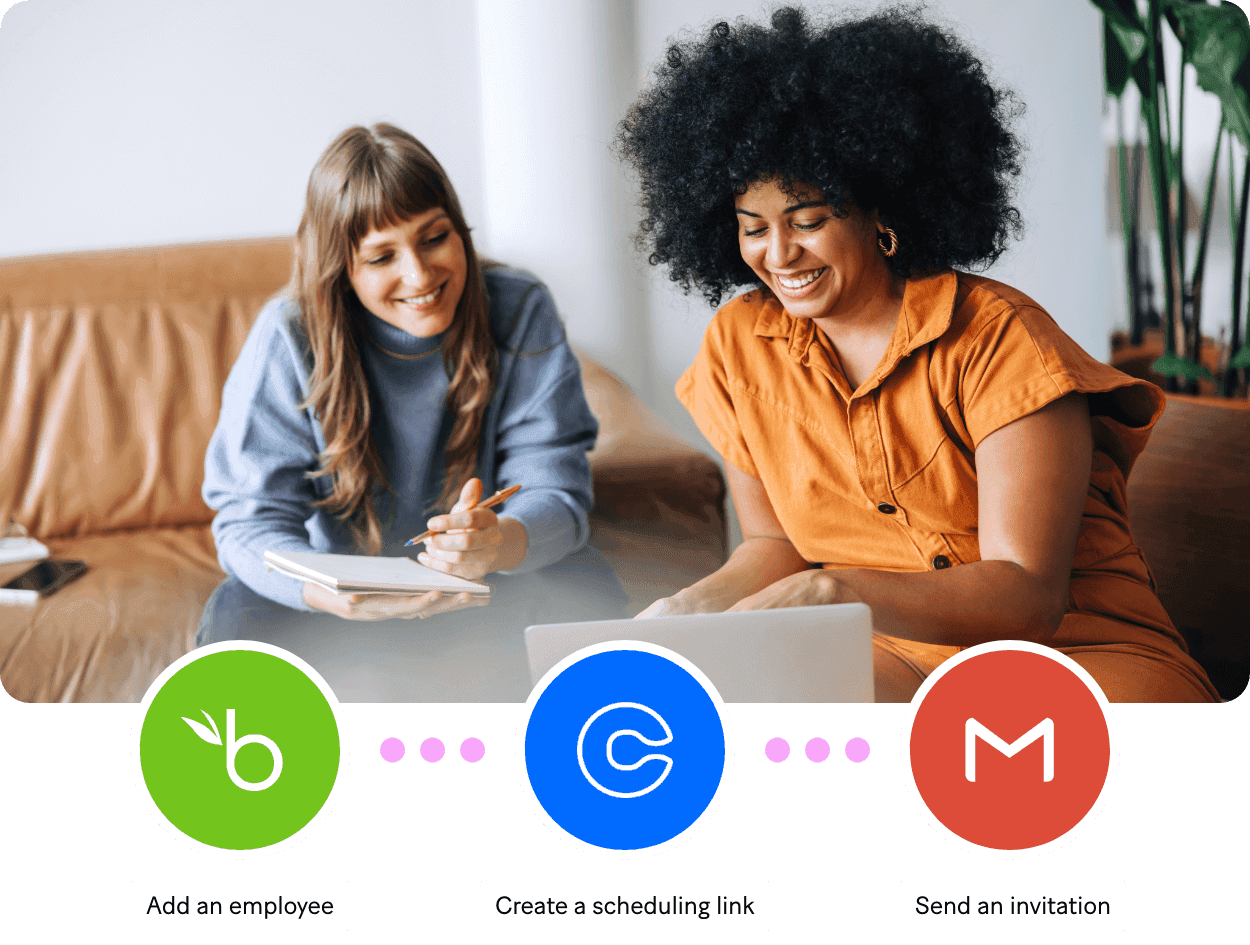
Make connects your HR apps across HR systems, applicant tracking software, payroll, benefits, and communication tools. Automated workflows trigger onboarding sequences, sync employee records, and revoke access on departure. AI adds a layer on top: screening resumes with semantic matching against job requirements and scoring candidates before a recruiter opens the first CV. Where employee questions need instant answers, an AI agent queries your internal documentation and even resolves inquiries, escalating to a human only when needed. Every step runs on a visual canvas your people team can see, audit, and trust.
Use Cases
HR automation use cases
Resume Screening Assistance
Recruiters spend hours reading resumes before a single interview is scheduled. At high volume, the bottleneck delays hiring and risks losing strong candidates to faster-moving competitors. Make pulls incoming applications from your Applicant Tracking System (ATS), uses AI to extract candidate data and perform semantic matching against job requirements, and generates a fit score for each applicant. Candidates above a specified threshold move to screening automatically. The rest are routed for a recruiter to review, because hiring decisions require human judgment, not just AI.
Rejection Communication
Sending rejection emails gets deprioritized until candidates have waited weeks for a response. Deploy an AI agent that drafts personalized rejection communications referencing each candidate's background and the role they applied for. Early-stage rejections are sent automatically. Late-stage rejections are drafted for recruiter review. Candidates with high fit scores get tagged for future opportunities. Every communication and routing decision is logged on the canvas.
Employee Onboarding and Offboarding
Every new hire triggers the same cross-department scramble: IT provisions accounts, a manager schedules orientation, someone orders equipment, another team assigns compliance training, and none of it is tracked in one place. In Make, you can fire the full onboarding sequence the moment a hire is confirmed — provisioning, equipment, scheduling, document collection — in parallel across all connected systems. Offboarding runs in reverse when a departure is logged: access revoked, devices recalled, payroll updated. New hires start productive on day one. Departing employees don't retain system access for weeks. HR stops chasing handoffs and starts seeing completion status across every step from a single workflow.
Employee Communications
HR teams answer the same questions about benefits, leave policies, and handbook guidelines dozens of times a week. Responses vary by who answers, and employees wait for information that should be instant. Deploy an AI agent that queries your internal documentation, determines when additional research is needed, and delivers answers directly. Routine questions close in seconds. Complex or sensitive inquiries are escalated with full context. The same agent pattern works for your internal IT helpdesk too.
Benefits of automation in HR
Make handles HR workflows across the full spectrum on one platform: from automated onboarding and offboarding to AI-powered resume screening to agents that answer employee questions and draft candidate communications.

Resumes are scored before a recruiter opens them. Candidates above threshold move to screening automatically. Rejection communications go out on time instead of sitting in someone's drafts for weeks.

Onboarding and offboarding sequences execute the same way every time. AI scoring applies consistent criteria across every candidate. When an agent drafts a rejection or answers a policy question, every output is logged on the canvas.

When your HR tools are connected, new hires feel welcomed from day one instead of waiting for access and materials. Employees get policy answers in seconds instead of days. Departing employees have a clean, professional exit.
How to automate your HR processes
Here is what you need to start automating your people operations.

Pinpoint the activities that cost your team the most time or impact your ability to recruit and retain the best talent: reading through 200 resumes to find five interviews, answering the same benefits question for the tenth time this week, or manually revoking access across six systems when someone leaves. That is your first workflow.

Select a platform like Make that integrates with your HRIS and ATS, and supports the full spectrum from simple onboarding triggers to AI-powered candidate screening to AI agents.

Start with Make's ready-to-use AI Agents or HR templates for recurring tasks, from employee onboarding and offboarding to AI-powered resume screening.

Design a workflow that automates your selected HR tasks. Add AI where you need candidate scoring or resume analysis. Configure agents where employee inquiries or candidate communications need handling. Manage everything from Make Grid.
Learn from business turning automation vision into reality

FAQ
AI-powered HR automation goes beyond scheduling onboarding emails and syncing employee records. HR automation means workflows that handle onboarding sequences, offboarding checklists, and payroll processing. You can add AI-enhanced steps that screen resumes and score candidates against job requirements. And you can deploy AI agents that answer employee HR questions and draft personalized candidate communications. All three levels run on the same visual canvas.
HR automation can handle a surprising range of tasks, from the routine to the transformative. Think payroll processing, candidate sourcing, benefits administration, recruitment, onboarding, offboarding and even performance reviews. Need to track vacation requests or keep compliance documents up to date? Automation has you covered there, too.
By tackling these time-consuming processes, automation frees up HR teams to focus on more strategic priorities.
Make does not replace your HRIS or ATS. It connects them to everything else. Your HRIS manages employee records. Your ATS tracks applicants. Your payroll system processes compensation. Make automates the workflows that live between these tools: syncing data, routing approvals, screening candidates, and handling employee inquiries. Everything runs on a visual canvas so your HR team can see exactly what is happening.
An AI agent in Make is a workflow where the AI determines what steps to take based on the goal you define. For HR, the Knowledge Support Agent is a practical example: it receives an employee question, queries your internal documentation, determines whether additional research is needed, and delivers an answer directly. Routine questions are resolved instantly. Complex inquiries are escalated with full context. Every interaction is logged on the visual canvas.
Make logs every workflow step on the visual canvas, so your team has a clear record of who was onboarded, when access was revoked, and what documentation was delivered. Automated workflows execute the same sequence every time, removing the inconsistency that creates compliance gaps. When AI screens candidates or agents draft communications, every action and output is logged alongside the rest of your HR workflows.
With HR automation, you can boost accuracy, save valuable hours, and create a more seamless experience for your employees. Plus, it allows HR teams to focus on what really matters: Strategic initiatives, building a stronger company culture, and improving employee satisfaction. Automation HR empowers teams to bring together efficiency and autonomy — all while setting your business up to scale with ease.
Make is built with enterprise-grade security. The platform is SOC 2 Type II certified and GDPR compliant, with encryption, SSO, and role-based access control. Every workflow step is logged and visible on Make's canvas, giving your people team full transparency into how employee data moves through your systems.
Choose a workflow to automate, get started for free and use Make's visual builder to create your AI automation or agent. Start with Make's ready-to-use AI agents from common tasks, or browse pre-built HR automation templates to get running in minutes. You can get inspired with those to get started and find your own game-changing use case, and contact our team for more information and help in tailoring these use cases for your business
How it works
Traditional no-code iPaaS platforms are linear and non-intuitive. Make allows you to visually create, build, and automate without limits.
References
Trusted by 400,000+ customers
"Make really helped us to scale our operations, take the friction out of our processes, reduce costs, and relieved our support team. It is difficult to not become a fan."

Philipp Weidenbach
Head of Operations at Teleclinic
"Make drives unprecedented efficiency within our business in ways we never imagined. It’s having an extra employee (or 10) for a fraction of the cost."

Cayden Phipps
COO at Shop Accelerator Martech
"The simplicity, flexibility and ability to build real complex automations without any knowledge of programming makes it the best thing since sliced bread."

Erkki Markus
Product Owner at Smaily
"True citizen development in the entire company. Make is present in every department, empowering the company to offer a unique customer experience."

Andreas Stryz
CTO & Co-founder at FINN
"I can't count the number of hours I've saved by using Make. Every single day is simpler because of Make's automation."

Kimberly D
Owner of Media Production